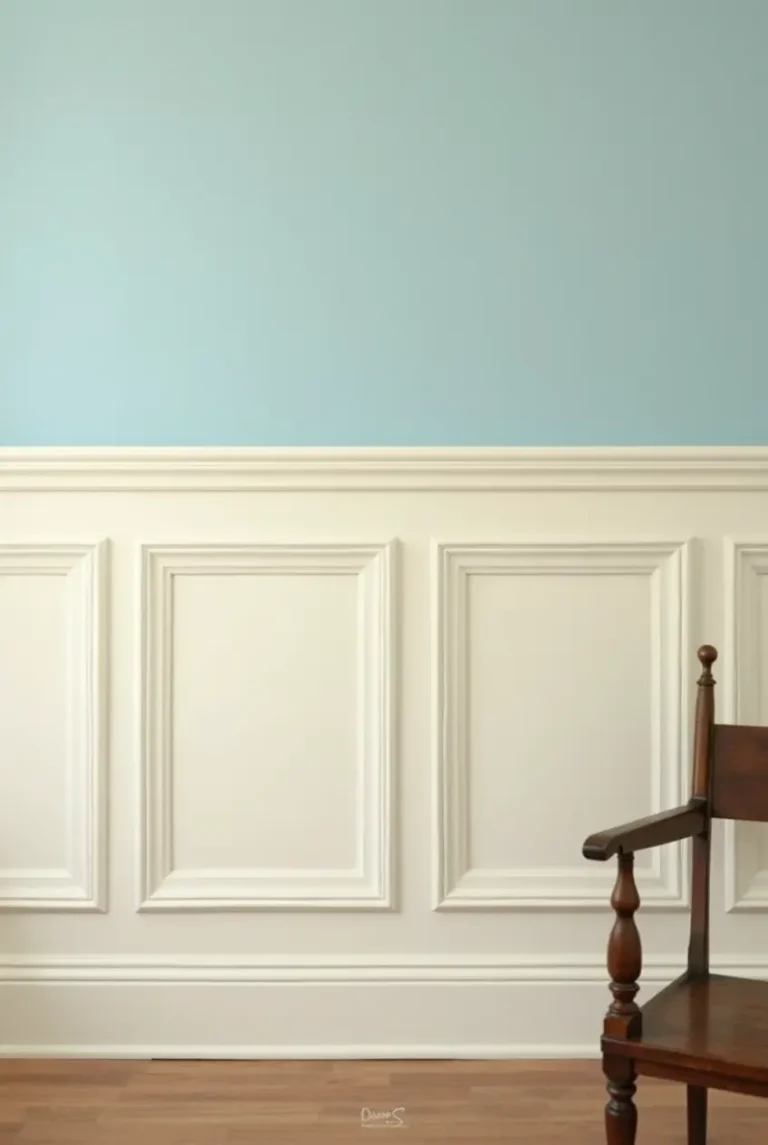
Chair rails add a horizontal line that can protect walls while giving a room clearer architectural structure. The best chair rail ideas go beyond simply attaching trim at an arbitrary height; they coordinate the rail with furniture, wall treatments, door frames, and the proportions of the room.
Used thoughtfully, this modest strip of molding can completely change how a wall is read.
Set the Height by Looking at the Whole Room
Traditional placement can be a useful starting point, but the rail should ultimately suit the room’s actual proportions. Ceiling height, window sills, furniture backs, and nearby cabinetry all influence where the horizontal line will feel balanced.
Mocking up the position with painter’s tape is far easier than relocating installed molding later.
Rooms featuring room-warming design details may benefit from aligning the chair rail with mantel components or other strong horizontal architectural lines.
Avoid Cutting Furniture Visually in Half
A rail directly through the middle of artwork, a headboard, or a major furniture piece can create an awkward composition. Consider the finished room rather than evaluating the empty wall alone.
Small adjustments in height can make a surprising difference.
Pair Chair Rails With Two-Part Wall Treatments
One reason chair rails remain useful is that they create a natural point for changing finishes. Paint can shift from dark below to light above, or wallpaper can occupy one section while painted paneling fills the other.
Neutral home styling references can help when comparing combinations of molding, wallpaper, paint, and furniture without tying the design to one decorating style.
Using the same color above and below the rail produces a quieter result where texture matters more than contrast.
| Treatment | Below the Rail | Above the Rail |
|---|---|---|
| Classic | Paneled finish | Paint |
| Graphic | Dark color | Light color |
| Decorative | Paint | Wallpaper |
| Minimal | Same paint | Same paint |
Add Paneling Beneath the Rail
A chair rail becomes more architectural when paired with picture-frame molding, beadboard, vertical panels, or simple rectangular trim below it. The rail then acts as a finished cap instead of a floating strip across the wall.
Studying outside-in design ideas can also inspire combinations because facade trim frequently demonstrates how horizontal bands can divide large surfaces without making them feel disconnected.
Keep Profiles Compatible
A delicate chair rail beside extremely heavy baseboards can look undersized. Likewise, thick ornate trim may feel out of place with very simple casings.
Profiles do not need to match, but they should feel related in visual weight.
Use Chair Rails in More Than Dining Rooms
Dining spaces are the traditional setting, yet hallways, bedrooms, home offices, stair landings, and powder rooms can also benefit from horizontal wall definition.
In narrow corridors, the rail can protect vulnerable wall areas while adding a visual line that carries through the space.
Bedrooms can use a chair rail to organize wallpaper or color blocking without introducing bulky architectural features.
Where Chair Rails Often Fail
The biggest mistake is treating installation height as a fixed universal rule. Rooms vary, and a rail placed correctly by formula can still look wrong beside tall windows, low furniture, or unusually high ceilings.
Over-decoration is another risk. Combining heavy chair rail profiles, ornate wallpaper, multiple paint colors, and dense panel molding can make a modest room feel crowded. Removing one decorative layer often improves the final balance.
Frequently Asked Questions
Does a chair rail need to match door trim?
No, but matching paint or related profiles can make the trim package feel more intentional. Different profiles work when their scale and level of detail remain compatible.
Can chair rails make ceilings look lower?
A strong horizontal line can visually divide wall height, especially when contrasting colors are used above and below it. Lower-contrast treatments usually create a softer effect.
Is chair rail molding still practical?
Yes. Besides adding architectural detail, it can protect portions of a wall from furniture contact and provide a clean transition between two finishes.
Place the Rail With Purpose
Choose the chair rail height only after considering windows, furniture, artwork, and other trim already in the room. Then decide whether the molding should quietly blend into the wall or intentionally divide two materials or colors.
A well-positioned rail feels connected to the architecture rather than applied afterward. That sense of proportion is what makes a simple length of trim look refined instead of decorative for decoration’s sake.