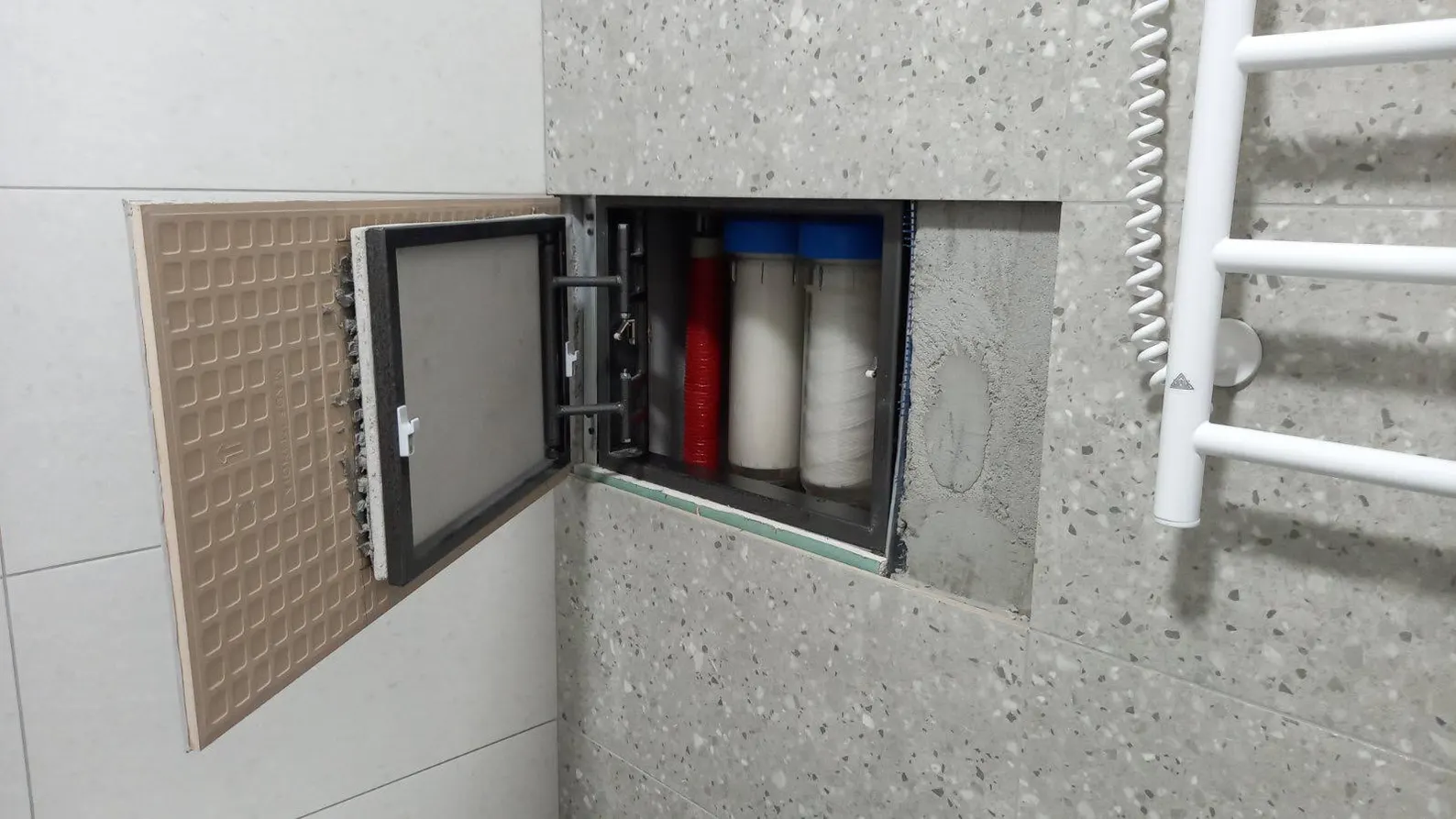
Plumbing hidden inside finished walls still needs occasional attention. Plumbing access panel ideas make it possible to reach valves, traps, connections, and serviceable equipment without leaving an unfinished-looking opening in the room.
A successful panel does two things at once: it visually fits the surrounding surface and can be removed quickly without breaking trim, tile, or drywall.
Start With What Must Remain Reachable
Before selecting a panel style, identify exactly what may need future service. Shutoff valves, tub and shower connections, cleanouts, pumps, and other components may require different opening sizes.
Give Hands and Tools Enough Space
A tiny opening can look discreet while being nearly useless. The panel should provide enough room to see the plumbing, operate valves, disconnect fittings where appropriate, and use basic tools.
That functional requirement should determine the opening before decorative details are chosen.
Match the Panel to the Wall Finish
Paintable drywall-style panels can disappear visually when their edges align cleanly with the surrounding wall. In paneled or decorative spaces, trim details may help integrate the opening.
People exploring wall design concepts can adapt surrounding patterns or molding lines so the access point feels intentional while remaining removable.
Avoid applying finishes that bond the panel permanently to the wall.
Use Cabinetry and Built-Ins Carefully
Some plumbing access can be hidden inside cabinets, closets, or removable shelving. This works well only when those interior elements do not block the actual repair area.
Looking through interior design reading may provide useful inspiration for integrating utility access into storage layouts without making the service opening obvious from the main room.
| Panel Style | Good Fit | Tradeoff |
|---|---|---|
| Paintable panel | Drywall surfaces | Seams may remain visible |
| Trimmed door | Traditional interiors | More visually noticeable |
| Cabinet access | Vanities or built-ins | Storage can block opening |
| Magnetic cover | Light-duty concealment | Requires secure attachment |
Consider Removable Decorative Covers
Magnetic panels, framed artwork, mirrors, or removable architectural details can sometimes conceal larger openings while keeping them accessible.
Homeowners collecting practical home inspiration may find ways to coordinate these covers with surrounding furnishings rather than treating the panel as an isolated mechanical feature.
Whatever hides the opening should be easy to remove without tools that could damage the finished surface.
Where Access Panel Designs Often Fail
The most common mistake is prioritizing invisibility over serviceability. A beautifully hidden panel is a poor design if a plumber has to remove permanent trim or cut new drywall to work behind it.
Another problem is forgetting the direction fittings must move during replacement. The visible opening may seem large enough, yet valves, cartridges, or pipe sections sometimes need extra clearance to come out of the wall.
Frequently Asked Questions
How large should a plumbing access panel be?
It should be large enough to reach the components behind it and perform foreseeable service work. The correct size depends on the plumbing arrangement rather than a single standard dimension.
Can an access panel be painted to match the wall?
Many panel materials can be painted, although preparation and compatible coatings depend on the product. Manufacturer instructions should guide finishing.
Where are plumbing access panels most useful?
They are useful behind tubs and showers, near concealed shutoffs, around serviceable valves, and anywhere future plumbing maintenance would otherwise require cutting a finished surface.
Make Future Access Part of the Finished Design
An access panel does not need to look temporary or industrial. With careful placement, matching finishes, and enough working clearance, it can blend into a completed room while preserving an important maintenance function.
Plan the opening before closing the wall, confirm what must pass through it during future repairs, and choose a cover that can be removed without damaging surrounding finishes.